Motion Sickness on the School Commute: What Actually Helps
Travel sickness is one of the most common reasons a child comes to dread the daily journey. Why stop-start city traffic is the worst case for it, what helps before and during the journey, and when it is worth seeing a doctor.
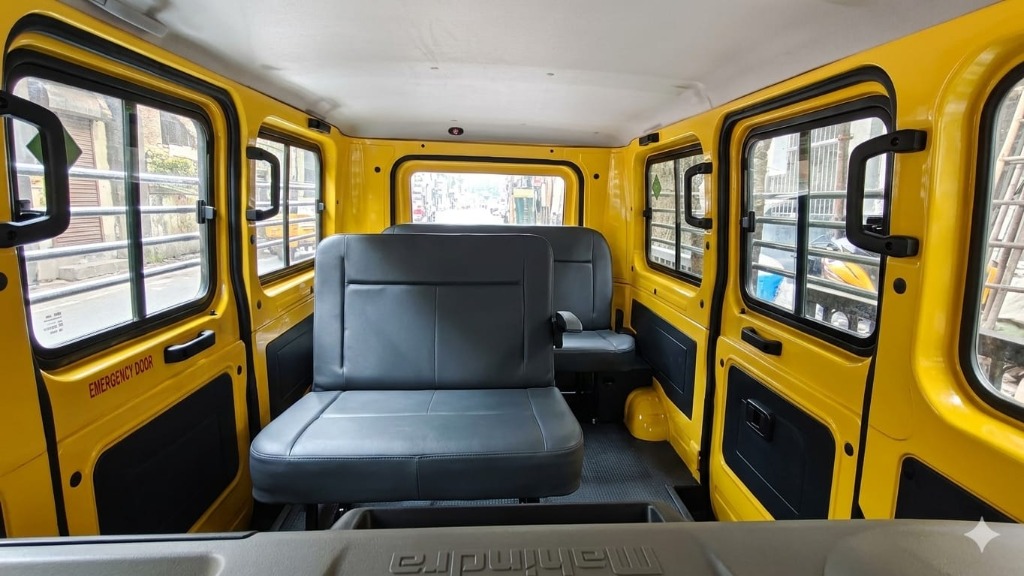
A child who feels sick on every journey will, before long, be a child who resists getting into the vehicle at all. Motion sickness often gets treated as a minor complaint, but on a twice-daily commute it shapes the whole experience of going to school.
It is also more manageable than most parents realise. Here is what is happening and what helps.
Why it happens
Motion sickness comes from a conflict between what the inner ear senses and what the eyes see. The inner ear registers movement, acceleration and turning. If the eyes are fixed on something stationary and close — a book, a phone, the seat in front — they report stillness. The brain receives two contradictory accounts of the same moment and responds with nausea.
This is why looking out of the window at the horizon helps: it resolves the conflict. The eyes confirm what the inner ear is already reporting.
Children between roughly two and twelve are the most susceptible, with a peak around eight to ten. Most grow out of it. There is a strong hereditary component — if you were a car-sick child, yours is more likely to be one.
Why the Mumbai commute is a difficult case
City traffic is close to the worst possible conditions for motion sickness, and for specific reasons:
- Constant acceleration and braking. Steady motion on an open road is comparatively easy to tolerate. Stop-start traffic is a continuous sequence of the exact inputs that provoke it.
- Frequent turning through congested lanes and narrow roads.
- Heat and poor airflow, both of which make nausea considerably worse.
- Strong smells — exhaust fumes, fuel.
- Long journeys, giving the effect time to build.
- Rear seating, where the motion is amplified.
Before the journey
Do not send them travelling on an empty stomach
This is the most common mistake, and it is understandable — parents assume an empty stomach means nothing to bring up. In practice an empty stomach makes nausea worse. A light, plain breakfast roughly an hour before travelling works better than nothing.
Keep the breakfast plain
Avoid heavy, oily or strongly spiced food before the commute. Toast, plain rice, a banana, idli, a biscuit — bland and dry is the principle. Avoid a large glass of milk immediately before leaving.
Sleep matters
Tired children are markedly more susceptible. A child who slept badly is more likely to be sick on the morning journey, which is one more argument for an earlier bedtime during term.
Loose clothing
Tight waistbands and collars make nausea worse. Worth checking if the uniform is a size too small.
During the journey
Seat position is the single biggest factor
A forward-facing seat near the front, where motion is least amplified and the view ahead is clearest, makes more difference than everything else on this list combined. Ask your operator. It is a trivial adjustment and most will simply do it.
Avoid the rear seats, and avoid sideways-facing seats entirely if the vehicle has them.
Look out of the window, far ahead
Teach your child to look at something distant through the front or side window — a building further down the road, the horizon — rather than at passing objects close by. Looking at things flashing past makes it worse.
No reading, no screens
This is the hardest rule to enforce and the most important one. A phone or a book on a moving vehicle is the most reliable way to trigger motion sickness in a susceptible child. If your child needs occupation, audio works: music, a story, a podcast, with eyes up.
Fresh air
An open window near their seat, or good ventilation, reduces nausea substantially. Heat and stale air are strong aggravators, which is why the problem is usually worse in May than in December.
Something to sip and something dry to nibble
Small sips of water, and a plain biscuit or dry cracker, settle a mildly unsettled stomach. Avoid fizzy drinks and fruit juice.
Ginger
Ginger has reasonable evidence behind it for nausea and is safe for children in ordinary food quantities. A ginger sweet or biscuit before the journey helps some children. It is not a cure, but it is harmless and worth trying.
Distraction and conversation
Talking, singing or a simple game reduces the focus on how the stomach feels. Anxiety about being sick genuinely makes being sick more likely, so a child who is occupied usually does better.
Tell the operator
Parents often do not mention this, treating it as their own problem to manage. It is much better handled jointly. Tell the driver and attendant so they can:
- Seat your child near the front, consistently.
- Keep a sick bag within reach, and tissues and water on board.
- Watch for the early signs — pallor, going quiet, sweating — and respond before it becomes an emergency.
- Stop safely where the road allows, if there is time.
- Handle it without embarrassing the child in front of the others. This is the part that matters most for whether the child dreads tomorrow.
A child who is sick on a vehicle and is treated kindly recovers quickly. One who is made to feel ashamed develops a much longer-lasting problem.
Medication
Over-the-counter travel sickness medicines exist and some are suitable for children, but they should not be used for a daily commute without medical advice. Many cause drowsiness, which is a poor trade for a child who then sits through a school day unable to concentrate.
Talk to your paediatrician before using anything routinely. If a doctor does prescribe something, tell your transport operator what it is and when it is given — it belongs in the medical information they hold.
When to see a doctor
Ordinary motion sickness is unpleasant but harmless. See a doctor if:
- It appeared suddenly in a child who previously travelled without trouble.
- It comes with headaches, dizziness when not travelling, or hearing changes.
- Your child is also being sick at times unconnected with travel.
- They are losing weight or avoiding food to avoid being sick.
- There is any vision change.
These are uncommon, but they are the situations where nausea on the commute is a symptom of something else rather than the problem itself.
The outlook
Most children grow out of this, typically in the early teens. In the meantime, the front seat, the window, no screens and a light breakfast handle the large majority of cases.
If your child struggles with the journey, tell us on 9870525637. Seat position is the easiest fix in school transport, and it is usually enough.
This article is general information drawn from our experience operating school routes, not medical advice. For any persistent or unusual symptoms, consult a doctor.