Helping an Anxious Child Through the First Weeks on a School Bus
For a lot of children the bus is harder than school itself. What the anxiety is usually about, what helps in the week before, and how to tell ordinary settling-in nerves apart from a problem that needs investigating.
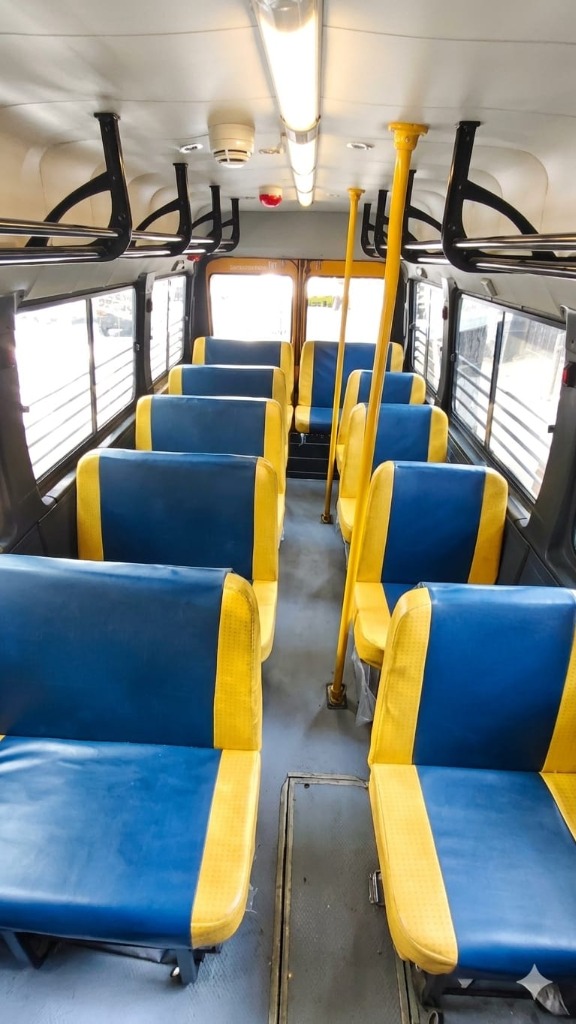
Parents are often surprised by this one. A child who is perfectly happy at school, who has friends and likes their teacher, becomes distressed every morning about getting into the vehicle.
It is common, it usually resolves, and there are things that help. It is also occasionally a signal worth taking seriously. Knowing which is which is most of what a parent needs.
What the anxiety is usually about
It helps to understand what the journey looks like from a five-year-old's point of view.
Separation happens at the vehicle, not at school. For a child who previously arrived with a parent, the goodbye has moved from the school gate — a busy, familiar place — to a kerb, at a fixed time, with the vehicle waiting. It is abrupt in a way the school gate is not.
The environment is unpredictable. A classroom has the same children, the same seats, the same adult. A vehicle has children of different ages, changing seating, and a route that varies with traffic.
There is no exit. A child who feels uncomfortable in a classroom can go to a teacher. On a moving vehicle they cannot leave, and for an anxious child that constraint is itself the problem.
Specific worries feel enormous. Needing the toilet. Feeling sick. Being forgotten. Not knowing where to sit. Older children being loud. Adults dismiss these; to a small child they are the whole thing.
Motion sickness. Worth ruling out early. A child who feels nauseous on every journey will become anxious about the journey, and it will present as anxiety rather than as illness.
Before the first day
Most of what helps happens in the week before the first journey.
Let them see the vehicle
Ask whether your child can sit in it before the first day. Ten minutes in a stationary vehicle — choosing a seat, seeing where the door is, meeting the driver — removes a great deal of the unknown. Most operators will arrange this readily. We do.
Introduce the adults by name
"Your driver is Ramesh and your attendant is Sunita" is far more reassuring than "the bus". A child who knows there is a specific adult responsible for them has someone to go to.
Walk through the sequence
Talk through exactly what will happen, in order: we wait here, the vehicle comes, you get on, you sit down, it goes to Aarav's stop, then school, and at the end of the day it brings you back here where I will be waiting. Predictability is the antidote to most of this.
Answer the practical questions honestly
If your child asks what happens if they feel sick, do not say it will not happen. Tell them: you tell the attendant, and she has a bag and will help you. Children are reassured by plans, not by reassurance.
Find a familiar face
If another child from your building or class is on the route, arrange for them to sit together for the first week. This is one of the most effective interventions available.
The first week
Keep the goodbye short
This is counterintuitive and it is the thing most parents find hardest. A long, drawn-out goodbye with repeated reassurance extends the distress. A warm, brief, confident goodbye — a hug, "I'll see you at four" — and then stepping back works better. Lingering communicates that there is something to be worried about.
Be visibly calm
Children read adult anxiety accurately. If you are anxious about the vehicle, your child will conclude the vehicle is worth being anxious about. This is genuinely difficult if you are also nervous, but it matters.
Be there at drop-off, early
For the first week especially, be visible at the stop before the vehicle arrives. A child scanning for a parent who is not there yet loses much of the confidence the day built.
Ask specific questions afterwards
"How was the bus?" gets "fine". Better: Who did you sit next to? What did you talk about? Was it noisy? Who got on after you? Specific questions get real answers, and real answers tell you whether something is wrong.
Send something familiar
A small comfort object in the bag can help a younger child, provided it is something that will not be a problem if lost.
How long it should take
Most children settle within two to three weeks. The pattern is usually distress in week one, reluctance in week two, and by week three the journey has become unremarkable. Some children settle in days. A few take a couple of months, particularly younger children or those who have had a difficult separation experience before.
When it is not ordinary settling in
Take a closer look if:
- Distress is getting worse after the first fortnight rather than better.
- Your child is anxious about the journey but relaxed about school, and that gap is not closing.
- There are physical symptoms — stomach aches, headaches, sleeplessness, bedwetting — clustered around the commute.
- Your child says something specific about another child, or about an adult on the vehicle.
- They refuse to say anything at all about the journey, having previously talked about it.
- The anxiety appeared suddenly after a period of being settled. This is the most important one. A child who was fine for two months and is now distressed is telling you something changed.
In any of these cases, talk to the operator. Ask what the seating arrangement is, who sits near your child, whether there have been incidents on the route, and whether the driver or attendant has changed. A responsible operator will take this seriously and look into it rather than reassuring you it is nothing.
What to ask your operator for
These are all reasonable requests, and a good operator will accommodate them:
- A seat near the attendant for the first few weeks.
- Seating your child with a specific friend.
- A quick message confirming your child boarded, during the settling-in period.
- A short conversation with the driver and attendant about your child specifically.
- For a very anxious child, a parent accompanying the first journey where the operator can arrange it.
We are asked for these regularly and they are not an imposition. A child who settles quickly is easier for everyone, including our attendant.
The thing worth remembering
The daily journey is, for most children, the first thing they do entirely without a parent. That is a genuinely significant step, and a few difficult weeks is a proportionate response to it rather than a sign that something has gone wrong.
Nearly every child who was inconsolable in June is, by August, complaining that the vehicle arrived before they finished breakfast.
If your child is struggling with the journey and you would like to talk about what we can do on our side, call 9870525637. We would much rather adjust the seating than have a child dread the morning.