How to Choose a School Van Service in Mumbai Without Guessing
Comparing school transport options usually comes down to price and a neighbour's recommendation. Here is a more useful way to evaluate operators, including what the fee actually covers and the warning signs worth taking seriously.
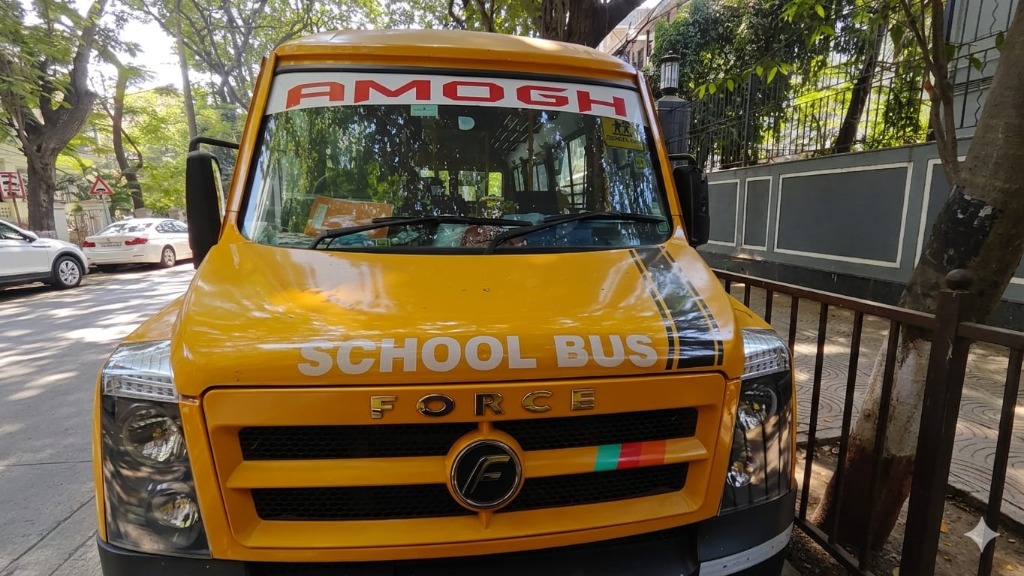
Choosing school transport is a decision most parents make once, quickly, under time pressure, at the start of an academic year. It is also a decision that puts your child in someone else's vehicle for roughly 400 hours a year.
The mismatch between how important the decision is and how little information parents usually have when making it is the reason this guide exists. What follows is a structured way to compare operators.
First, work out what you actually need
Before comparing anyone, get clear on your own requirements. It makes every subsequent conversation shorter.
- Both directions or one? Some families need only the morning trip.
- What time does school actually start, and how much buffer do you want?
- Will an adult be home at drop-off? This matters more than almost anything else for younger children.
- Does your child have a medical condition that the operator must know about?
- How long a journey is acceptable? A shorter, more expensive route may be better value than a cheaper one that adds 30 minutes each way.
- Do after-school activities mean an irregular return time on some days?
Van or bus?
Both are legitimate. They suit different situations.
A van carries fewer children, which usually means a shorter route, fewer stops and a driver who knows every child by name. It tends to work well for younger children and for families slightly off the main routes. It is generally more expensive per child.
A bus carries more children over a fixed route. It is usually cheaper, more likely to have a dedicated attendant in addition to the driver, and more likely to have a backup vehicle available when something breaks. The journey is often longer because there are more stops.
Neither is inherently safer. A well-run van beats a badly-run bus and the reverse is equally true.
What the fee should cover
Fees vary with distance, vehicle type and whether you need one or both directions. Rather than comparing headline numbers, establish what each quote includes:
- Is it one-way or return?
- Is it charged monthly, quarterly or annually?
- Are the school holiday months charged?
- Is there a separate registration or security deposit?
- How much notice is given before a fee revision?
- What happens to the fee if your child is absent for an extended period?
On that last point, be aware that almost every operator charges for the full month regardless of days missed, because the seat is reserved whether or not it is used. An operator who promises pro-rata refunds for absences is either going to disappoint you later or has priced that risk in elsewhere.
Be careful with the cheapest quote
There is a real floor to what school transport costs. Fuel, driver wages, attendant wages, insurance, maintenance, permits and fitness certification are largely fixed. An operator quoting well below everyone else is recovering that money somewhere, and the usual places are:
- More children per vehicle than it is registered to carry.
- No attendant, leaving the driver to supervise children while driving.
- Deferred maintenance — tyres, brakes and servicing pushed back.
- Cheaper drivers, meaning less experienced ones.
- Lapsed insurance or permits.
The difference between the cheapest option and a properly run one is often a few hundred rupees a month. It is worth understanding what that difference is buying before treating it as a saving.
Questions worth asking
These tend to be more revealing than the standard ones:
- How many children will be on the vehicle, and what is it registered for? Two numbers. They should match or the first should be lower.
- How long will my child actually be on board? Ask for the pickup time and the school arrival time, and check the difference is acceptable.
- Who is the attendant and what are they responsible for?
- What happens when the vehicle breaks down? You want to hear about a specific backup arrangement.
- How do you handle a child who is unwell during the journey?
- What if nobody is home at drop-off? The answer must keep the child supervised.
- Can I speak to two current parents on this route? A confident operator will connect you. This is the single most useful question on the list.
- How long have you been operating, and how long has this driver worked for you? High driver turnover tells you something.
Warning signs
Some things should end the conversation:
- Reluctance to show registration, insurance, permit or fitness documents.
- Refusal to let you see the vehicle before committing.
- A demand for a large upfront payment with no receipt.
- No written record of what has been agreed.
- Vagueness about how many children are on the route.
- No named person to contact other than the driver.
- Irritation at being asked safety questions.
That last one is worth emphasising. The reaction to the questions is often more informative than the answers. An operator who finds it reasonable that you are careful about your child is an operator who is likely to be careful too.
Check the route, not just the operator
An operator can be excellent overall and still wrong for you, because the route that serves your address is the long one. Ask specifically about your route: the pickup time, the number of stops before school, and the arrival time. A 25-minute difference each way is 200 hours a year of your child's life.
Before you commit
- See the actual vehicle your child will travel in, not a photograph.
- Meet the driver.
- Get the fee, the route and the timings in writing, even informally over WhatsApp.
- Confirm the notice period for cancellation.
- Make sure the operator has your number, your emergency contact, and your child's medical information.
The first month is the real test
You cannot fully evaluate an operator before using them. What you can do is pay close attention for the first month, because problems show up early:
- Does the vehicle arrive at roughly the promised time, consistently?
- Were you told about the first delay, or did you discover it?
- Does your child seem comfortable? Ask them, more than once.
- Is the vehicle as full as you were told?
- Is it the same driver most days?
If the answers are wrong, raise it early. An operator who responds well to a concern in week three is one worth keeping. One who becomes defensive is telling you what the rest of the year will be like.
A final word
The parents who end up happiest with their school transport are not the ones who found the cheapest option or the one closest to home. They are the ones who asked a few direct questions at the start and paid attention for a month afterwards.
If you are weighing up options in Prabhadevi, Dadar West or nearby areas and want to talk through any of this, call 9870525637 or use our contact page. We are happy to answer these questions about our own service, and equally happy if you take this checklist to someone else.