School Bus Safety Rules in India: What Every Parent Should Actually Check
India has detailed safety requirements for school vehicles, but most parents have never been told what they are. Here is what the rules cover, what to look for on the vehicle itself, and which questions to ask an operator before you sign up.
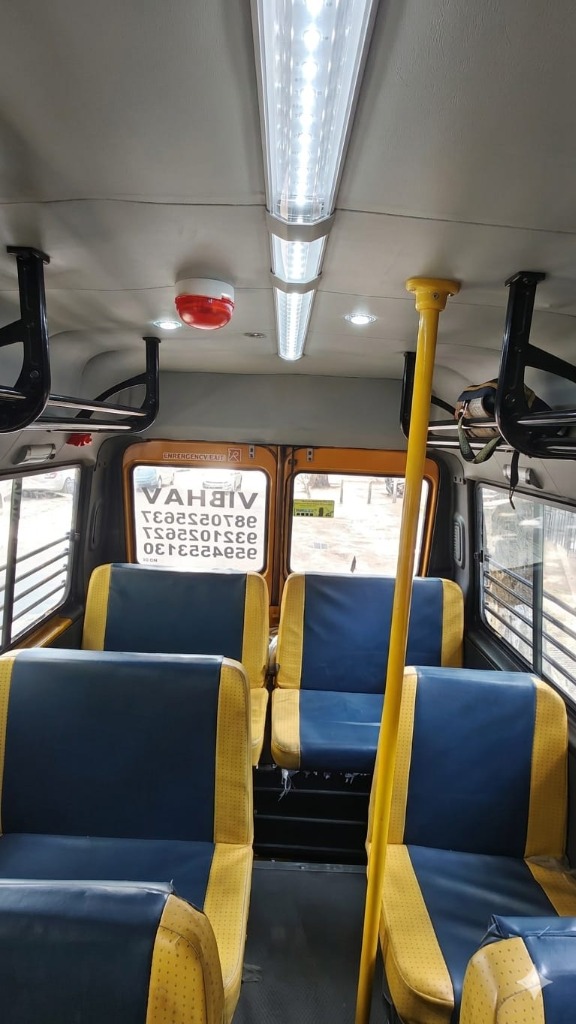
Most parents choose a school van or bus the same way: a neighbour recommends someone, the price sounds reasonable, and the vehicle shows up the next Monday. The safety conversation, if it happens at all, is a single question about whether the driver is experienced.
That is understandable. Almost nobody tells parents that India has a fairly detailed framework of safety requirements for vehicles that carry schoolchildren, or that they are entitled to check compliance before handing over their child. This guide covers what that framework requires, what you can verify yourself in five minutes standing next to the vehicle, and what to ask before you commit.
Where the rules come from
School transport safety in India draws on several sources at once. The Central Motor Vehicles Rules set out construction and fitness requirements. The Supreme Court laid down specific directions for school buses in the late 1990s following a series of accidents. Individual states and their Regional Transport Offices then add their own conditions, and the Ministry of Road Transport and Highways has issued guidance aimed at standardising the picture.
The practical consequence is that the precise requirement can vary depending on where you live and when you are reading this. The points below reflect the framework as it is widely applied, and in Maharashtra in particular. Treat them as the questions to ask rather than as a statute you can quote, and check the current position with your local RTO if something matters to you specifically.
What you can check by looking at the vehicle
You do not need technical knowledge for most of this. Walk up to the vehicle when it arrives and look.
Colour and markings
A dedicated school bus should be painted golden yellow with "School Bus" displayed clearly. A vehicle hired by a school rather than owned by it should carry "On School Duty". The school's name and a contact telephone number should be visible on the body. These markings exist so that other drivers recognise what they are following, and so anyone who sees a problem can report it to someone accountable.
Windows
Windows should have horizontal grills. This is a specific and slightly unusual requirement, and it exists because children put their arms and heads out of windows. The grill is what stops that ending badly when the vehicle passes close to another one.
Doors
Doors should have working locks that a child cannot open casually from the inside while the vehicle is moving. Check that the door actually latches rather than being held shut.
First aid and fire safety
A first aid box should be present and stocked, not an empty box bolted to a wall to satisfy an inspection. A fire extinguisher should be fitted, within its service date, and accessible rather than buried under bags. Ask to see both. An operator who is doing this properly will show you without hesitation.
Space for school bags
There should be provision for bags under the seats. When bags sit in the aisle, they become an obstruction in exactly the situation where the aisle matters most.
Speed governor
School vehicles are generally required to have a functioning speed governor limiting them to a low maximum, commonly 40 km/h. You cannot inspect this by looking, but you can ask whether it is fitted and when it was last checked.
What you should ask about the people
The vehicle matters less than who is driving it.
Driver experience and licensing
Drivers of school vehicles are expected to hold a valid commercial licence with a transport badge, and to have substantial experience driving heavy or passenger vehicles — commonly a minimum of five years. Ask directly how long the driver has been driving passenger vehicles and whether they have any adverse record for dangerous driving or driving under the influence.
Attendants
An attendant should travel with the children, particularly where young children are carried. Their job is the part of the journey the driver cannot manage: supervising boarding and alighting, keeping children seated, and handling a child who is unwell. A vehicle carrying six-year-olds with nobody but a driver is a vehicle where nobody is watching the children while it is in motion.
Verification
Ask whether drivers and attendants have been background verified. Ask what that verification involved. "Yes" on its own means very little; a specific answer means the operator has actually done it.
The documents worth seeing
Any legitimate operator can produce these, and you are entitled to ask:
- Registration certificate — confirms the vehicle is registered for passenger use.
- Fitness certificate — confirms it has passed inspection and is current.
- Insurance — confirms valid cover, and that it is passenger cover rather than private.
- Permit — confirms the vehicle is permitted to operate as a school or contract carriage.
- Pollution under control certificate — current.
If an operator becomes evasive when asked for these, that is your answer. You have learned what you needed to know.
Overloading: the thing to watch for after you sign up
Every vehicle is registered to carry a specific number of passengers. Overloading is the most common safety failure in school transport, and the one most likely to appear gradually, after you have signed up, as the operator adds families to a route.
It is worth checking occasionally. Count the children when the vehicle arrives. If children are sitting on each other, standing, or sharing seats meant for one, raise it. A well-run operator will already know the number and will not be uncomfortable discussing it.
Questions that reveal how an operator actually works
The compliance checklist tells you whether someone meets the minimum. These questions tell you what they are like to deal with on an ordinary Tuesday:
- What happens if the vehicle breaks down mid-route? Listen for a concrete answer involving a backup vehicle and a call to parents, not an assurance that it never happens.
- How will I be told about a delay? A specific channel — a phone call, a WhatsApp group — is a better sign than a vague promise.
- What happens if nobody is home at drop-off? The only acceptable answer involves the child staying supervised. Anything that ends with a child alone outside a locked door is a serious problem.
- Who do I call if I have a complaint about the driver? There should be a person, and it should not be the driver.
- Can I meet the driver before my child starts? Reluctance here is worth noticing.
What to teach your child
Some of the safety margin is in your child's hands, and it takes ten minutes to explain:
- Wait on the footpath, away from the kerb, until the vehicle has fully stopped.
- Never walk close behind the vehicle, where the driver cannot see you.
- If you drop something near the vehicle, tell an adult rather than reaching for it.
- Stay seated while the vehicle is moving.
- Keep hands, head and belongings inside the window.
- Tell the attendant immediately if you feel unwell.
A reasonable way to think about this
None of this requires you to become an expert in motor vehicle regulation. The realistic version is: look at the vehicle properly once, ask to see the documents once, ask the five questions above, and then pay attention to whether what you were promised is what actually happens over the first month.
Operators who are doing this well find these questions completely normal. We are asked them regularly, and we would be more concerned about a parent who did not ask.
If you are comparing operators in Mumbai and want to talk through any of this, call us on 9870525637 — including if you end up choosing someone else. A parent who checks the vehicle carefully is a good outcome regardless of who they choose.