School Bus Services: Safe and Reliable Transportation for Students
What a well-run school bus service actually does behind the scenes on a normal day, from the early-morning vehicle check to the last drop, and why each step matters to parents.
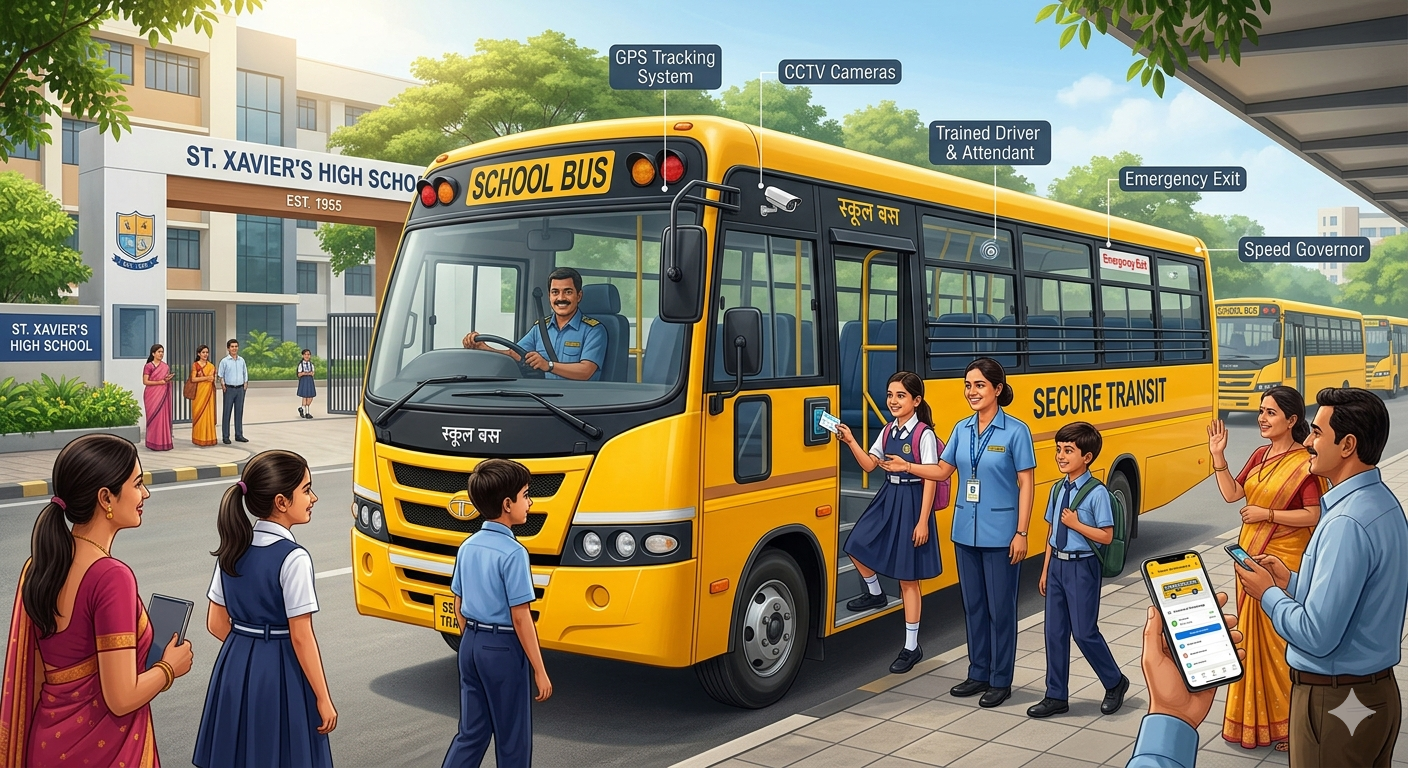
Parents usually see only two moments of a school bus service: the bus arriving at the stop in the morning, and the bus bringing their child back in the afternoon. What happens in between, and before and after, is what decides whether the service is actually safe and reliable. This article walks through a normal day on a well-run school route, step by step, so parents know what good practice looks like and what questions to ask any provider.
Before sunrise: the vehicle check
A reliable day starts before the first child boards. A careful driver does a short walk-around and inside check every morning:
- Tyres: visibly inflated, no damage, adequate tread, especially important in the monsoon.
- Lights and indicators: headlights, brake lights and indicators working.
- Brakes, horn and wipers: tested before leaving.
- Doors and windows: doors close and lock properly, window grills are intact.
- Safety equipment: first-aid box stocked, fire extinguisher present and within date.
- Cleanliness: seats and floor clean and dry.
Problems found at this stage are fixed or reported before the route starts, not discovered halfway through it.
The morning route
Morning routes are planned so that the first pickup is early enough to reach school on time in normal traffic, with some buffer. At each stop, good practice looks like this:
- The vehicle stops fully at the agreed point, on the footpath side.
- The attendant gets down, greets the child and parent, and helps the child board.
- The child is seated, and belts are fastened where fitted, before the vehicle moves.
- The attendant marks the child as present on the route list.
The driver's focus stays on the road. Phone calls from parents are handled by the attendant or the operator, not the driver while driving.
Arriving at school
At school, the vehicle uses the space set aside for school transport, and children are unloaded on the school side, never into traffic. The attendant makes sure every child on the list has actually entered the school gate, and checks the seats for anything left behind, or for a child who has fallen asleep at the back. This last check sounds obvious, but it is one of the most important habits in school transport.
During the school day
Between routes the vehicle is refuelled, cleaned if needed and parked safely. This is also when any issue noticed in the morning, such as a squeaky brake or a stuck window, gets looked at. Operators with more than one vehicle use this time to plan cover if a vehicle or driver will not be available for the afternoon.
The afternoon route
Afternoon routes tend to be harder than morning ones. Children are tired, traffic is heavier, and school timings sometimes change at short notice for exams or events. At dismissal, the attendant collects children at the agreed point in school, checks them against the list, and confirms any messages from parents about absences or changes before leaving.
At each drop, the child is handed over only to the parent or an authorised person. If nobody is present, the child stays in the vehicle while the attendant calls the family. A child is never simply let off at an empty gate.
After the last drop
When the last child is dropped, the vehicle is checked once more from front to back. Forgotten bags, bottles and umbrellas are set aside for return. Any issue during the day, such as a child who felt unwell, a behaviour problem or a road delay, is communicated to the parents concerned.
Communication throughout the day
Good communication is part of reliability. Parents should expect to be informed about significant delays, early dismissals, holiday schedules and any change of driver or vehicle. Many operators use a WhatsApp group per route for this. Some vehicles also have GPS tracking, which helps the operator monitor routes and respond to delays, although it does not replace a responsive driver and attendant.
Why this matters when choosing a service
Every provider will say they are "safe and reliable". The difference lies in these daily habits. When speaking to an operator, ask them to describe their day: What do you check before the route? What happens if a child is not at the stop? How do you make sure no child is left in the vehicle? Who informs parents about delays? Clear, specific answers are a good sign.
Our commitment
At Amogh Van/Bus Services we have run school routes in Prabhadevi, Dadar West and nearby areas since 2010, and these routines are the foundation of how we work. If you would like to know more about how our routes operate, please call us or visit our contact page.