Heat and the School Commute: Keeping Children Safe in Mumbai Summers
A stationary vehicle in April sun heats up faster than most people expect. What heat does to a child on the daily commute, the early warning signs worth recognising, and the one rule that has no exceptions.
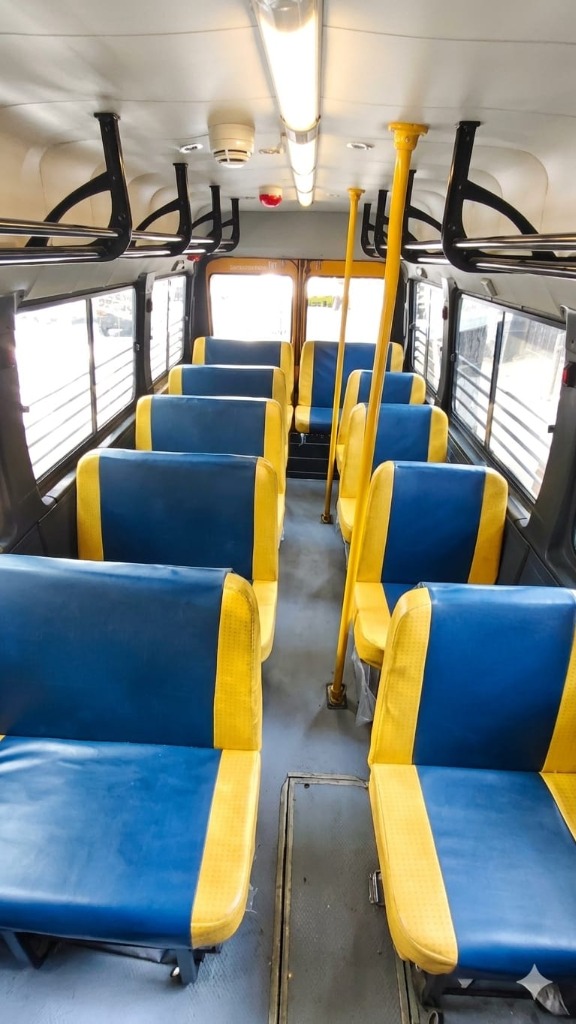
Mumbai's hardest months for the school commute are March through May, when humidity makes high temperatures considerably harder on the body than the number alone suggests. Children feel this more than adults, for reasons of basic physiology, and the commute is often the hottest part of their day.
Why children are affected more than adults
This is not simply that children complain more. There are real differences:
- Children have a larger surface area relative to body mass, so they absorb heat from the environment faster.
- They produce more heat per kilogram during activity.
- Their sweating response is less efficient than an adult's, so they shed heat less effectively.
- Young children often do not recognise thirst or the early signs of overheating, and will not ask for help until they are quite unwell.
- They are less likely to remove a layer or move out of the sun on their own initiative.
The practical implication: an adult who feels warm on a vehicle is describing conditions in which a six-year-old may be genuinely struggling.
The rule with no exceptions
A child must never be left alone in a parked vehicle, even briefly, even with a window open.
A closed vehicle in direct sun heats very quickly. Most of the rise happens in the first fifteen to thirty minutes, and it continues well past the point that is survivable for a small child. Leaving a window partly open makes much less difference than people assume.
Because a child's body temperature rises considerably faster than an adult's, heatstroke can develop in a period that feels far too short to be dangerous. "I was only gone ten minutes" is the sentence that accompanies most of these tragedies.
This is also why a proper operator has an end-of-route check: an adult physically walks the length of the vehicle, looking at every seat and under every seat, before it is locked. A sleeping child in a rear seat is easy to miss in a mirror. It is not possible to miss during a walk-through.
Ask your operator whether they do this. It is a fair question and the answer should be immediate.
What a well-run operator does in summer
- An end-of-route walk-through, every trip, no exceptions.
- Parking in shade where possible, and opening the vehicle to ventilate before children board.
- Functioning ventilation — air conditioning that works, or windows that open properly and a fan that runs.
- Water available on board.
- Adjusted timings where practical, to avoid the worst of the afternoon.
- Minimising idle time with children on a stationary vehicle.
- Staff who recognise heat illness and know what to do.
- Sun-facing windows shaded, through curtains or film, where regulations permit.
What parents can do
Hydration starts before the journey
A child should drink water before leaving, not only during the journey. Send a full, insulated bottle and — this is the part that gets missed — ask whether they actually drank it. Many children do not, simply because nobody prompted them.
Avoid sugary drinks for the commute. Plain water is better. For a long journey in extreme heat, a lightly salted drink such as nimbu paani or a rehydration solution is more effective than water alone at replacing what is lost in sweat.
Dress for the weather within the uniform rules
Cotton rather than synthetic where there is a choice. A cap for the wait at the stop, if the school allows it. Avoid a dark-coloured extra layer worn only because it is part of the uniform, if the school is flexible in summer — many are.
Shade at the stop
Waiting in direct sun for ten minutes before a hot journey is a meaningful part of the total heat load. If there is shade within sight of the stop, teach your child to wait there and step out when the vehicle appears.
Consider the return journey specifically
The afternoon trip is usually the hard one: peak heat, and a child who has already been active all day. If your child struggles, it is worth asking whether an earlier or shorter return route is possible.
Mention any relevant condition
Children with asthma, heart conditions, obesity, or who are taking certain medications can be more vulnerable to heat. Tell the operator so the attendant knows to keep an eye out.
Recognising heat illness
These progress, and recognising the early stage is what prevents the late one.
Heat cramps
Painful muscle cramps, usually in the legs or abdomen, with heavy sweating. The earliest sign. Move to shade, rest, sip water or a rehydration drink.
Heat exhaustion
Heavy sweating, cool and clammy skin, paleness, tiredness, weakness, headache, nausea, dizziness, a fast but weak pulse. A child at this stage feels awful and looks it.
What to do: move them to a cool, shaded place immediately. Loosen clothing. Cool the skin with a damp cloth. Give small, frequent sips of water. Do not leave them alone. If they do not improve within about thirty minutes, or cannot keep fluids down, get medical help.
Heatstroke — a medical emergency
Body temperature very high, skin hot and often dry with sweating stopped, a rapid strong pulse, throbbing headache, confusion, slurred speech, and possibly seizures or loss of consciousness.
What to do: call for emergency medical help at once. While waiting, move the child to the coolest available place, remove excess clothing and cool them aggressively with wet cloths or by fanning. Do not give fluids to a child who is confused or unconscious.
The change from wet skin to hot dry skin, and any confusion, are the signs that separate heat exhaustion from something far more serious. They mean emergency help, immediately.
Questions worth asking your operator
- Do you do a physical end-of-route check of every seat?
- Does the air conditioning work, and what happens when it fails mid-route?
- Is water available on board?
- Where does the vehicle park between trips?
- Have the driver and attendant been briefed on heat illness?
- What happens on an extreme heat day?
In summary
Summer heat on the commute is manageable with ventilation, water, shade and adults who know what to watch for. The one thing that is not manageable, and that has no acceptable version, is a child left alone in a parked vehicle.
If you would like to know how we handle the summer months on your child's route, call 9870525637.
This article is general guidance based on our operating experience and widely published heat safety advice. It is not medical advice. If you suspect heatstroke, seek emergency medical help immediately.